PREPARATION:
Step 1: Mix the Dough
In the bowl of a stand mixer fitted with the hook attachment, combine all of the dough ingredients and mix on medium low until everything is combined. Continue to knead the dough in the stand mixer for 5–8 minutes, or until the surface is smooth, taut, and it passes the windowpane test. To perform a windowpane test, take a small amount of dough and stretch it between your fingers as thinly as you can without tearing it. If you can get it thin enough to see light shining through without it breaking, it has passed windowpane.
If mixing by hand, combine the ingredients in a bowl until a shaggy dough forms. Turn the dough out onto a lightly floured surface and knead for about 10 minutes until the dough ball is smooth and passes windowpane.
Step 2: First Rise
Lightly grease a large mixing bowl and form the dough into a smooth ball. Place it in the bowl and allow to rise in a warm place, covered with a clean Flour Sack Towel, for 1.5–2 hours or until doubled.
Step 3: Shape and Second Rise
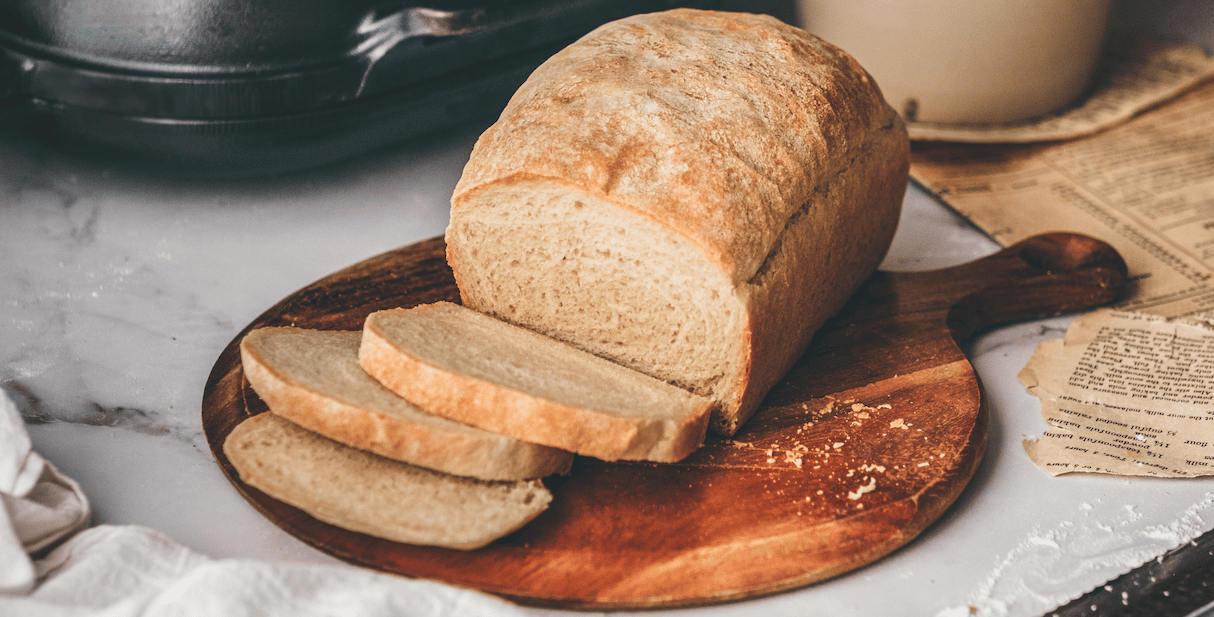
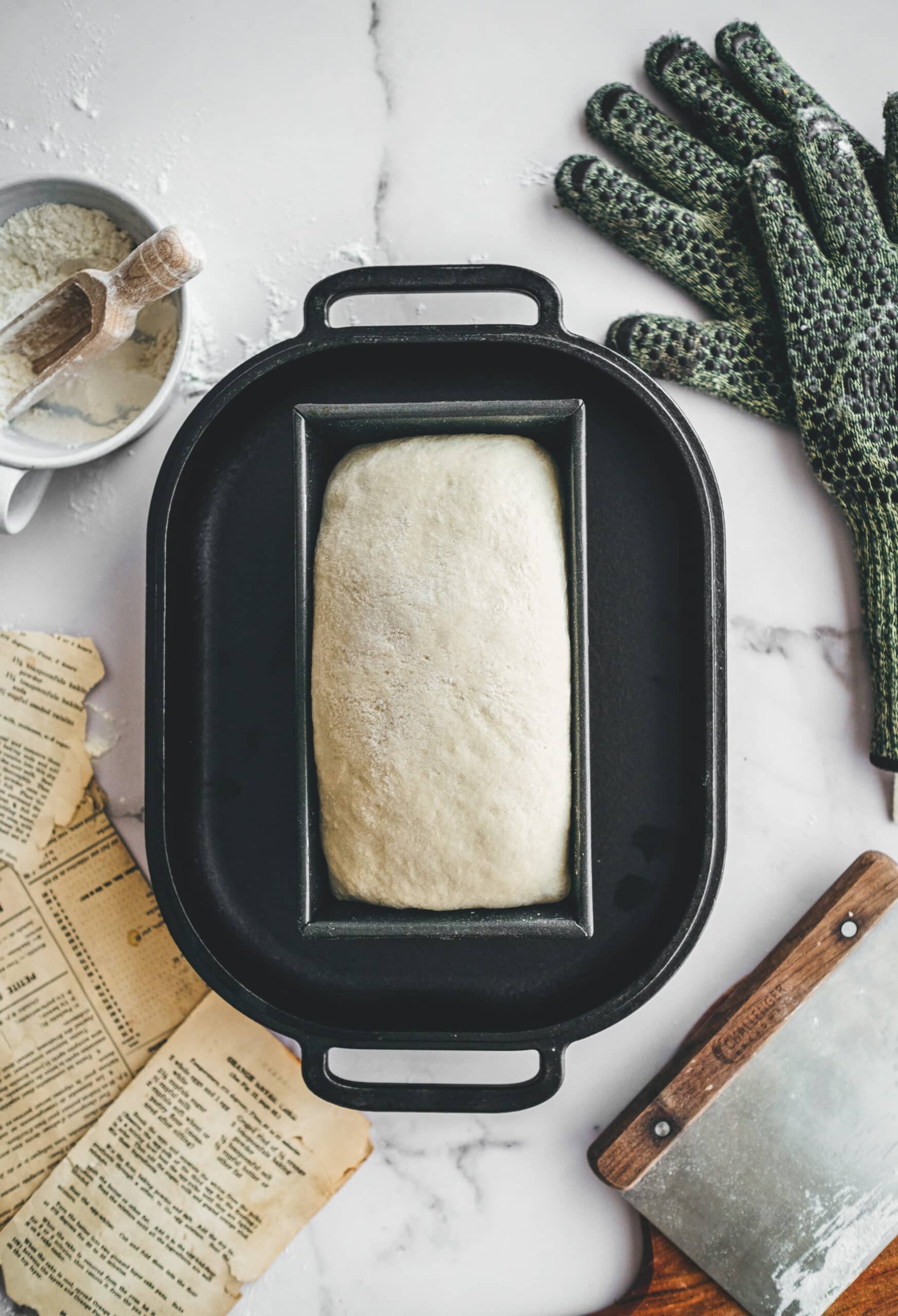
When the dough has doubled, punch it down and turn it out onto a lightly floured work surface. Gently press the dough into a rectangle, and fold the bottom portion up 2/3 of the way to the top of the dough like you are folding a letter. Fold the top 1/3 of the way down so it overlaps with the bottom fold. Turn the folded dough so the short side is facing you and roll it up. Pinch the seam closed on the sides and place in the loaf tin. Allow to rise for 30–60 minutes, until puffy and visibly risen.
Step 4: Bake the Bread
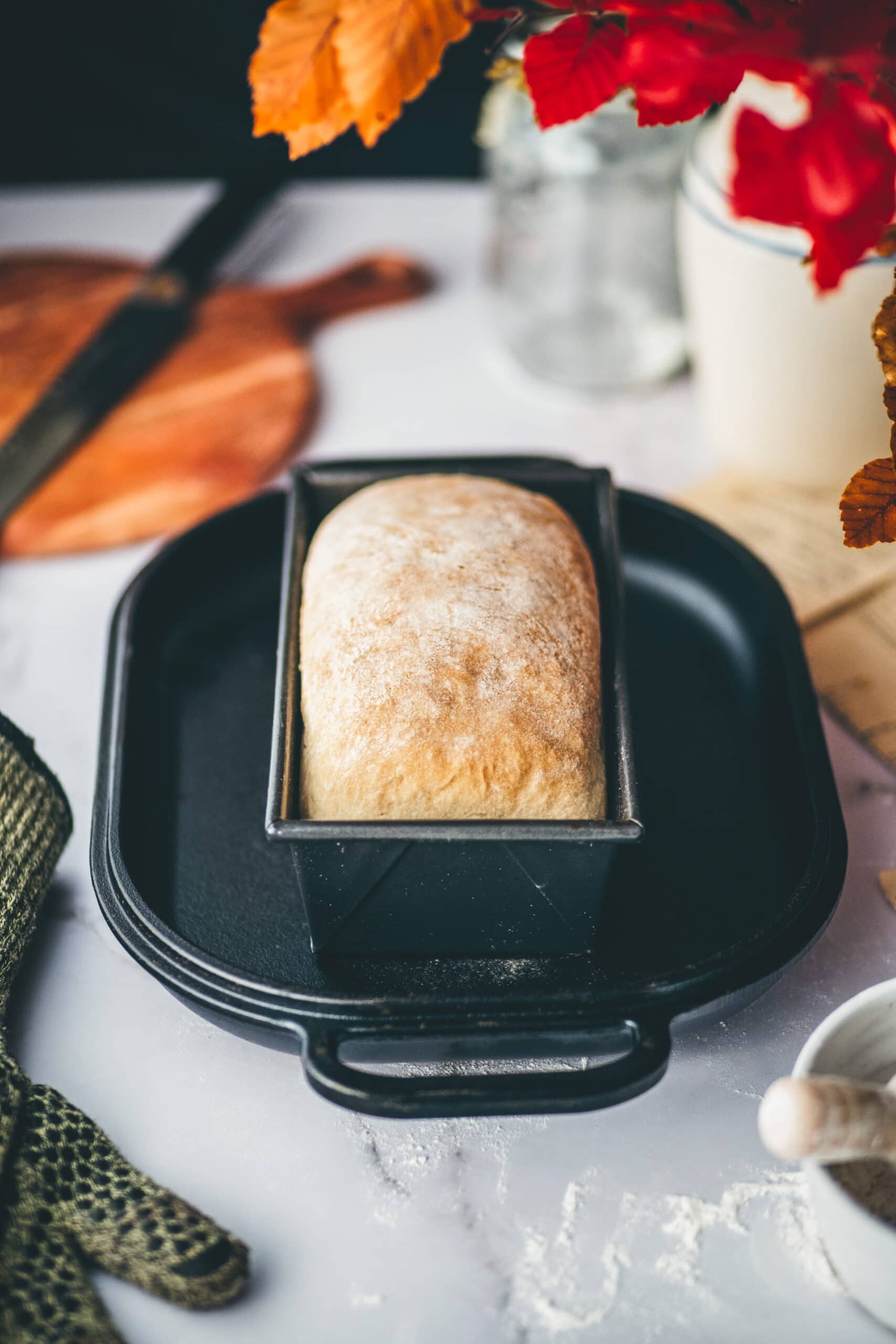
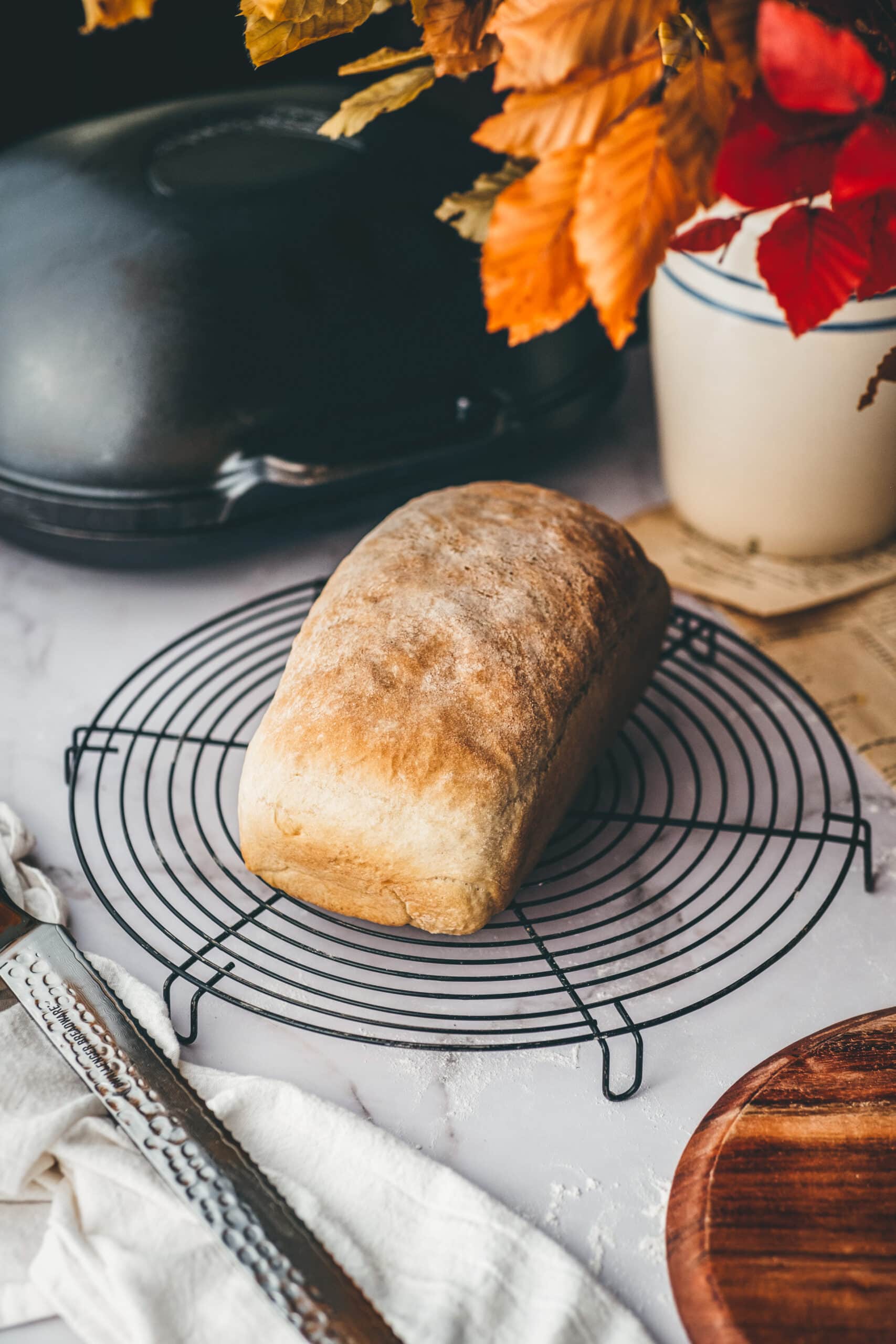
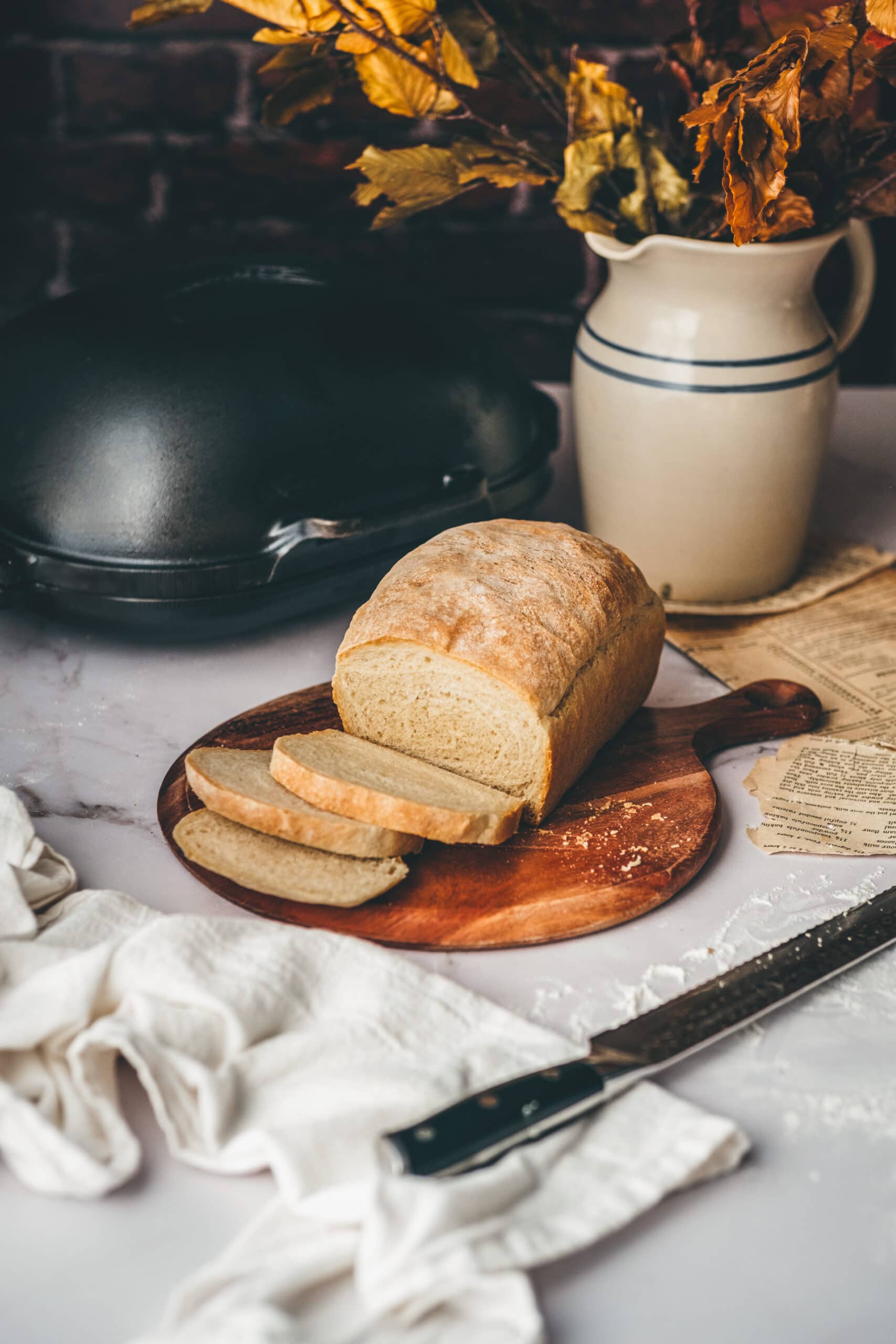
Preheat your oven to 425°F with your Challenger Pan inside. Once the oven has preheated, drop the temperature to 375°F. Place the risen loaf in the loaf tin inside the Challenger Pan and bake, covered, for 15 minutes. After the covered portion of the bake, uncover and continue to bake for 20–25 minutes, or until the bread is crusty, golden brown, and has an internal temperature of at least 200°F.