Ciabatta con Segale
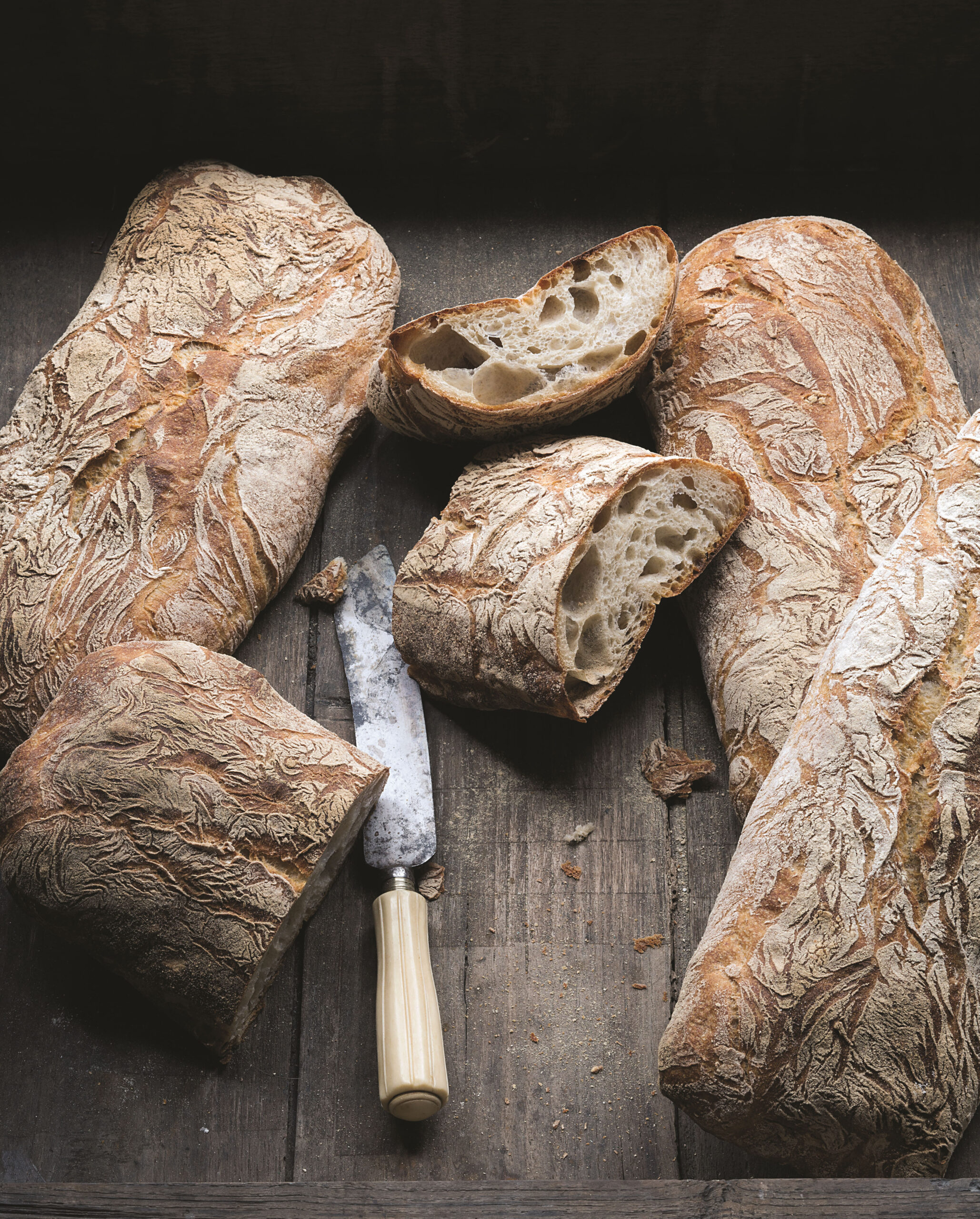
Although rye isn’t associated with Roman baking, it is increasingly used by Italian bakers across the country looking to incorporate a variety of whole grains into their breads. This bread was inspired by the rye ciabatta I saw at Antico Forno Roscioli in Rome (page 232). The breads there are a mix of the very traditional along with the new and novel.
Italian bakers don’t maintain a rye sourdough, so when they want to bake with rye they simply build one from the wheat starter they already have, which is what I’ve done here. To wind up with a rye-flavored ciabatta that is characteristically bubbly and light, I’ve limited the use of rye to the starter, using wheat flour in the final dough.
Start to Finish: 8 to 14 hours
- Rye sourdough starter: 6–8 hours
- Knead: 10 minutes
- First fermentation: 2½ hours
- Rest: 40 minutes
- Bake: 35 minutes
Makes two 509-gram loaves
| Ingredient |
Baker’s % |
Metric |
| R YE SOURDOUGH S TAR TER |
|
|
| Whole rye flour |
100% |
45 g |
| Water |
100% |
45 g |
| Liquid sourdough starter |
22% |
10 g |
| Final Dough |
|
|
| Tipo 00 flour (W 250–260) |
100% |
500 g |
| Water |
80% |
400 g |
| Salt |
2.8% |
14 g |
| Dry instant yeast |
1% |
5 g |
| Rye sourdough starter |
20% |
100 g |
- Prepare the rye sourdough starter: Mix rye flour, water, and liquid sourdough starter. Cover and ferment at room temperature until doubled, 6–8 hours.
- Make the final dough: Combine flour, 300 g water, salt, yeast, and rye starter. Mix on low speed for 5 minutes, then gradually add remaining water. Continue mixing for another 5 minutes.
- First fermentation: Transfer dough to an oiled container, cover, and rest 1 hour. Fold the dough, return to container, and rest another 1½ hours.
- Preheat oven: One hour before baking, line a peel with parchment. Place a baking stone in the oven and preheat to 450°F (230°C).
- Final proof: Shape dough into a rectangle, cut into two loaves, dust with flour, cover, and rest for 40 minutes.
- Bake: Dimple loaves, slide onto stone, add ice cubes for steam, and bake 10 minutes. Reduce temperature to 425°F and bake 25 minutes more. Cool completely before serving.
Note for Professional Bakers
The double hydration technique can be used to skip the second fold. Mix with the first portion of water until gluten is 80% developed, then add remaining water and finish mixing. From Living Bread by Daniel Leader with Lauren Chattman. © 2019 Daniel Leader.